What Is Allostatic Load and Why Do We Feel It Right Now?
By Libby Pellegrini, MMS, PA-C•
Chronic ConditionsMental HealthStress

Editor’s Note: May is Mental Health Awareness Month. This article is part of a special series we’re publishing this month with personal stories, education and resources around mental health, especially managing mental health during a pandemic. If you need immediate help please contact The National Suicide Prevention Line at 1-800-273-8255 or text HOME to 741741 to connect with a crisis counselor for free at Crisis Text Line.
The observation that many of us are feeling stressed these days could quite easily be condemned as an understatement. You may feel that when you wake up in the morning, you haven’t quite cleared the underlying stress that built up the day before. Throughout your day, you may feel as though you are submerged in a pool of simmering stress, unable to fully escape.
Neuropsychologists have a term for the burden imposed by this state of constantly feeling stressed, and it is “allostatic load.” Read on to learn more about allostatic load, why many of us are feeling it right now, and how it can affect our health.
What Is Allostatic Load?
Allostatic load is a concept that was first introduced to describe the hidden cost of repeated exposure to chronic stress. Just as our ancestors were primed to respond to an environmental stressor (such as an approaching lion) with a surge of adrenaline and cortisol, we react similarly to perceived threats in our modern-day lives. These stress exposures can accumulate and wreak havoc.
To understand allostatic load, you must first understand the concept of “allostasis.” Typically, we are functioning in a state of equilibrium known as “homeostasis.” This means our body’s various systems are working in balance; there is an input for every output. If our brains perceive a threat, we flip into “allostasis,” wherein certain body systems change in order to keep everything afloat.
Allostasis is an extension of homeostasis, and it can be very effective in the moment. For example, if you are jogging and you see a bear, allostasis allows for a temporary surge of stress hormones and increased blood flow to your leg muscles so that you can hightail it home.
However, if you are continuously feeling stressed and your body is constantly engaging in allostasis—enacting physiologic changes to accommodate for the perceived stressful situation—this continuous back and forth can take a toll. Enter the allostatic load.
The researchers who first defined allostatic load referred to it in their article in the Archives of Internal Medicine as “the cost of chronic exposure to fluctuating or heightened neural or neuroendocrine responses resulting from repeated or chronic environmental challenges that an individual reacts to as being particularly stressful.”
Essentially, it is the cumulative toll of all of the miniature stress activations that you endure on a daily basis.
What Are the Effects of Allostatic Load?
- High blood pressure
- Impairment of response to insulin
- Decrease of the immune system
- Increase of plaque to form in blood vessels
- Deposit of visceral fat around organs
- Increase the likelihood of developing a chronic condition
Carrying an allostatic load is like carrying around a heavy weight on your back that you can’t seem to shake. It can cause wear and tear on various body systems, with the predominance of stress hormones driving up your blood pressure, impairing your response to insulin, decreasing your immunity, encouraging plaques to form in your blood vessels, and depositing visceral fat around your organs. Allostatic load can, therefore, increase the likelihood of developing chronic diseases, and it is associated with worse health outcomes.
Allostatic load can even interfere with your cognitive function. If you are constantly feeling stressed, this can manifest as a background process that takes energy and attention away from the tasks directly in front of you, impairing your brain’s speed, efficiency, learning, and memory formation.
Why Do We Have Allostatic Load during a Pandemic?
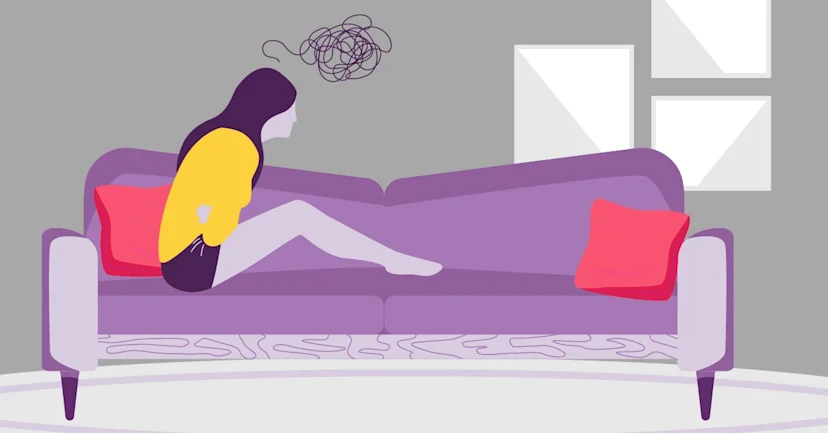
You may have conflicted feelings about feeling stressed right now. Many Americans have been told that staying put is their patriotic obligation, so they find themselves stuck on the couch doing a whole lot of nothing, without any physical threats. Compared to the workers on the frontline, and those who are sick or have sick loved ones, they may feel guilty about feeling stressed in the first place.
So, why is staying put (and having the opportunity to squeeze in more rest, exercise, reading, and TV-watching than we have in years) causing us all to feel so stressed? Look no further than allostatic load.
Small, seemingly innocuous disruptions to our daily routine during a pandemic can trigger stress responses that we aren’t even fully aware of, and add to our allostatic load. These could include:
- Seeing a social media post about a friend who is sick or has lost a job
- Encountering someone wearing a mask while on a neighborhood walk
- Seeing an empty grocery shelf
- Reading a distressing news headline
- Overhearing an interviewer on the radio expressing a conflicting political opinion
- Missing a previously scheduled social obligation
- Receiving a text from a friend who is “checking in” at an atypical time of day
These small strains of daily life are only a piece of the puzzle, as there are also many big picture stressors, such as employment, health, or finances. All of these challenges induce physiologic changes in our bodies, driving up our allostatic load.
How Can You Reduce Your Allostatic Load?
If you are feeling stressed on a daily basis, it is possible that you are contributing to an allostatic load. To prevent the future health consequences associated with an allostatic load, you can intentionally work to increase your stress resilience.
Consider activities that helped you in a pinch before the pandemic hit (such as socialization or exercise) and modify them to fit your current restrictions. By being deliberate—physically blocking out time on your calendar to watch a favorite movie with a friend over video chat, or do a virtual exercise class—you can lower your stress activation and allostatic load.

Libby Pellegrini, MMS, PA-C
Libby Pellegrini, MMS, PA-C, is a nationally certified physician assistant. She currently works in emergency medicine where she sees and treats a broad spectrum of illnesses across all age ranges. She holds a journalism degree from Northwestern University.
The information on this site is generalized and is not medical advice. It is intended to supplement, not substitute for, the expertise and judgment of your healthcare professional. Always seek the advice of your healthcare professional with any questions you may have regarding a medical condition. Never disregard seeking advice or delay in seeking treatment because of something you have read on our site. RxSaver makes no warranty as to the accuracy, reliability or completeness of this information.
If you are in crisis or you think you may have a medical emergency, call your doctor or 911 immediately.