
10 Women Who Shaped the Medical World We’re Honoring on International Women’s Day
By Ilima Loomis•
Holidays
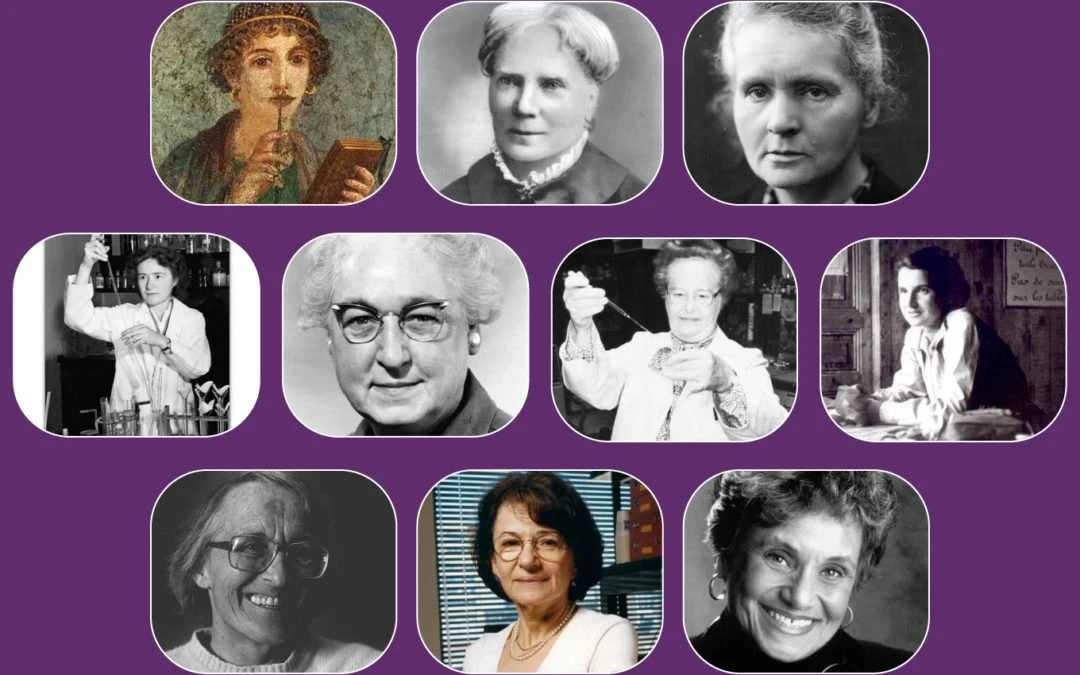
Even though their accomplishments haven’t always been recognized, women have been making contributions to medicine since ancient times, both through scientific research and by pioneering new approaches to medical care.
On March 8th we’re celebrating International Women’s Day by recognizing some of the most noteworthy medical women influencers who changed the course of healthcare history.
Metrodora
Access to education was restricted for women in ancient Greece, and, as a science derived from the gods, the practice of medicine was considered to be for men only — women who wanted to provide healthcare were limited to midwifery. An extraordinary exception to that rule was Metrodora, an early gynecologist and scientist who studied pathology and wrote a number of medical texts, including a treatise on women’s diseases that’s the earliest known medical text written by a woman.
Dr. Elizabeth Blackwell (1821-1910)
Reportedly admitted to New York’s Geneva Medical College as a “joke,” Dr. Elizabeth Blackwell became the first American woman to earn an M.D. in 1849. Blackwell, who was inspired to enter medicine after a dying friend said that her worst suffering would have been spared if her doctor had been a woman, dedicated her career to supporting medical education and training for women. After being refused a job at a New York City dispensary, she founded the New York Infirmary for Women and Children, with her sister, Dr. Emily Blackwell, as well as Dr. Marie Zakrzewska, as well as a medical college for women, which opened in 1867.
Marie Curie (1867-1934)
A pioneer in the study of radiation, Marie Curie and her husband, Pierre, discovered the elements polonium and radium, and coined the term “radioactivity.” She focused on medical and therapeutic applications for radium throughout her career, discovering its role in treating cancer, and helping introduce X-ray technology to medicine. She and her husband shared the 1903 Nobel Prize in physics with French physicist Antoine Henri Becquerel for their research into radioactivity. After her husband’s death, she received the 1911 Nobel Prize in chemistry for her discovery of radium and polonium, making her the only person to receive two Nobels in the sciences. After years of exposure to radiation, the dangers of which were still largely unknown, Curie died of leukemia in 1934.
Dr. Gerty Cori (1896-1957)
The first woman in America to win a Nobel Prize in science, and the first woman to receive a Nobel in the category of medicine and physiology, Dr. Gerty Cori made important discoveries about the human metabolic system. Together with her husband and research partner, Dr. Carl Cori, Gerty Cori discovered the process through which energy moves through the body, from muscles, to the liver, and back. Named the “Cori cycle,” the discovery was the first time the role of carbohydrates in supplying energy was explained, and was an important step to developing treatments for diabetes. Cori went on to identify the enzymes that convert glycogen to sugar, the discovery for which she received the Nobel Prize.
Dr. Virginia Apgar (1909-1974)
Noticing how many babies died in the first 24 hours after birth, obstetrical anesthesiologist Dr. Virginia Apgar developed a method to quickly and effectively evaluate a newborn’s vital signs. The five-point scoring system helped physicians identify babies that needed immediate medical intervention, and the Apgar Score is still a standard in delivery rooms today. The approach helped pave the way for the field of neonatology and specialized care for newborns. She went on to identify and call attention to the health risks of premature birth, leading to a new focus on prenatal care in treating pregnant women.
Gertrude Elion (1918-1999)
Biochemist and pharmacologist Gertude Elion changed how drugs are made, by pioneering a new approach to “rational” drug design. Instead of discovering new drugs and medicines through trial and error, Elion, with her partner George H. Hitchings developed a new approach, by studying how cells function and creating compounds designed to target specific pathogens without harming healthy human cells. The research led to the development of chemotherapy drugs, as well as AZT, one of the first medications to successfully treat AIDS. Together with Hitchings and James Whyte Black, Elion received the Nobel Prize for physiology and medicine in 1988.
Rosalind Franklin (1920-1958)
One of the most famously overlooked female scientists in history, Rosalind Franklin made a critical contribution to the understanding of DNA — but was never credited for her role by the men who eventually received a Nobel Prize for the discovery. As an x-ray crystallographer, Franklin used x-ray diffraction to create pictures of DNA molecules. Her unpublished data and images were shown to scientists James Watson and Francis Crick who combined it with their own theoretical work to come up with their revolutionary model of DNA’s double-helix structure.
Elisabeth Kübler Ross (1926-2004)
Known for her best-selling book On Death and Dying, in which she described the five stages of grief, Swiss psychiatrist Elizabeth Kübler-Ross said her interest in compassionate end-of-life care was sparked by her experience working with refugees in World War II and her visit to the Majdanek death camp. In America, Kübler-Ross helped lead the hospice care movement and advocated for terminally ill patients to be treated not just clinically but with compassion by the doctors providing care.
Patricia Goldman-Rakic (1937-2003)
Trained as a psychologist, Patricia Goldman-Rakic revolutionized neuroscience with groundbreaking discoveries into the structure and workings of the brain’s frontal lobes and how those control higher cognitive functions. These intricate parts of the brain had previously been thought to be too delicate and complex to be understood by science. She also led the first studies into how dopamine influences the brain. By working across multiple disciplines like biochemistry, electrophysiology, pharmacology, and behavioral science to study the brain, Goldman-Rakic’s research provided the basis for a modern understanding of schizophrenia, Alzherimer’s disease, cerebral palsy, and other disorders.
Dr. Marilyn Hughes Gaston (1939-present)
The only African American woman to graduate in her medical class, Dr. Marilyn Hughes Gaston dedicated her career to health equality and ensuring poor families get access to medical care, and led groundbreaking research on sickle cell disease. In a 1986 study, Dr. Gaston showed that screening at birth could identify newborns with sickle cell disease so that they could be given a long-term penicillin treatment to prevent infection, preventing dangerous complications. The findings led screening to be adopted nationwide.
From groundbreaking discoveries to new approaches to clinical practice, these women helped shape medicine as we know it. International Women’s Day may be on March 8, but the contributions of these and other remarkable women are felt in healthcare every day.
Ilima Loomis
Ilima Loomis is a freelance writer and journalist who specializes in writing about health care, HR, science, travel, and Hawaii. You can find more of her work at ilimaloomis.com. Ilima is a regular contributor to the RxSaver blog.
The information on this site is generalized and is not medical advice. It is intended to supplement, not substitute for, the expertise and judgment of your healthcare professional. Always seek the advice of your healthcare professional with any questions you may have regarding a medical condition. Never disregard seeking advice or delay in seeking treatment because of something you have read on our site. RxSaver makes no warranty as to the accuracy, reliability or completeness of this information.
If you are in crisis or you think you may have a medical emergency, call your doctor or 911 immediately.